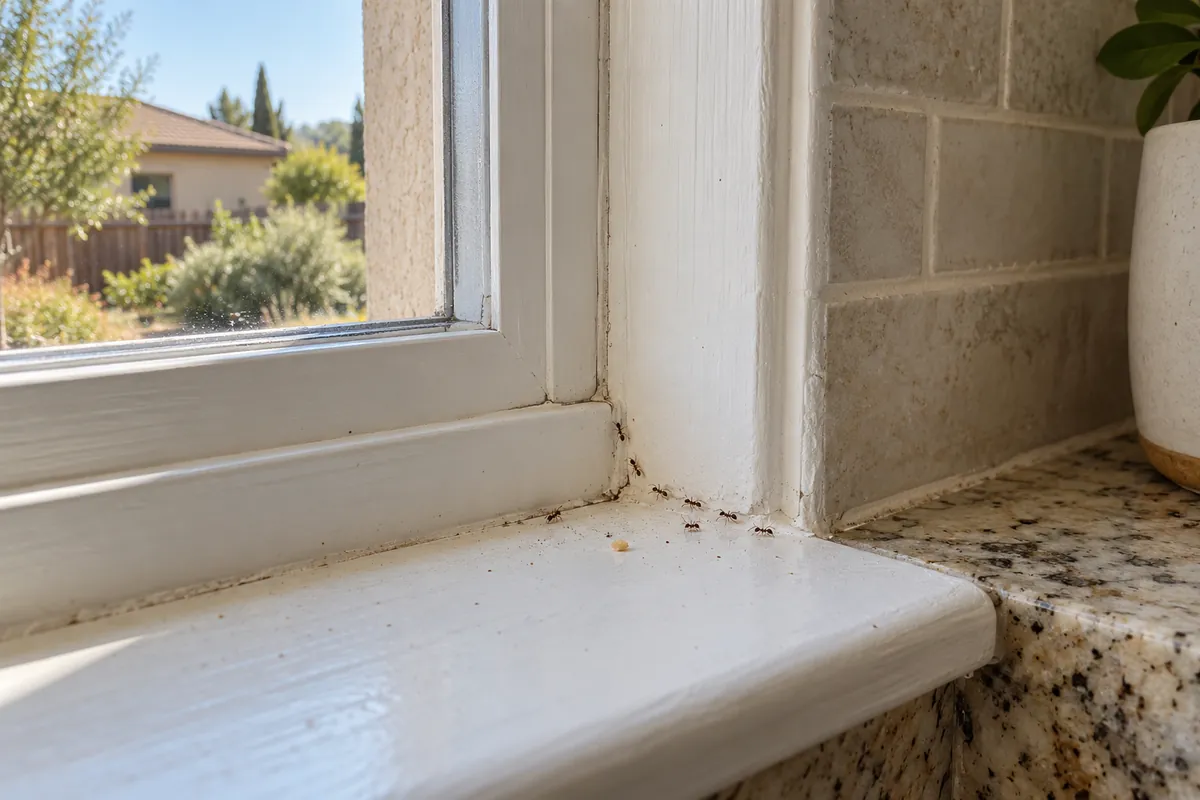
No two ant problems in San Diego, CA are handled quite the same way. Argentine ants, carpenter ants, pavement ants and odorous house ants each respond to a different treatment, so the species comes first. What you see matters: a trail across the kitchen counter, sawdust under a window or a mound by the patio points toward a particular plan. Use Call Now, say where the ants are, and you will reach our team serving 76 ZIP codes around San Diego.
Ants you are likely to find in a house
Odorous house ants
Small, dark brown to black, with a rotten-coconut smell when crushed. Large colonies nest in wall voids, under sinks and in landscaping. They follow trails to sweets and water.
Pavement ants
Dark brown, nesting under slabs, driveways and sidewalk cracks, with small mounds of soil beside pavement. They enter through slab cracks and carry food back to the nest.
Carpenter ants
These are big black or red-and-black ants that hollow out wood that is damp or damaged. Coarse piles of sawdust-like frass, a rustling sound inside walls and winged ants in spring all suggest a nest close by.
Argentine ants
In warm regions this light-to-dark brown ant forms huge, connected colonies, and long columns of workers run up the walls, particularly after rain or during dry spells.
Where ants get into the home
- Gaps around plumbing under sinks and behind appliances
- Door thresholds, weather stripping and window frames
- Tree limbs, shrubs and vines that touch the roof or siding
- Utility lines, dryer vents and AC lines entering the wall
- Cracks in the foundation and slab expansion joints
Why bait beats spray for most ants
Killing the ants you can see only removes trail workers; the colony carries on. Bait that acts slowly gets taken back to the nest and shared, which cuts down the queen and brood. Gel baits and granular baits go along the trails, and a perimeter treatment using a non-repellent product puts a barrier in place outdoors.
Using repellent sprays or wipes may split one colony into several. Hold off on cleaning the trail with spray until the bait has done its work.
Moisture, wood and carpenter ant damage
Carpenter ants dig through wood rather than eat it, and they favor timber that leaks, condensation or rot have softened. The nest is usually close to the water source, whether that is a leaking roof, a failed window seal, a deck attached to siding or a gutter full of debris.
Dealing with the ants but not the water means soft wood and a problem that probably returns. You are getting the full answer only when our team traces the moisture and tells you it has to be fixed.
Ant prevention you can do this week
- Store food, pet food and sugary items in sealed containers and wipe crumbs at night
- Take out trash and recycling often, and rinse containers
- Fix dripping faucets and wet spots under sinks
- Trim plants so nothing touches the house, and keep mulch a few inches from the foundation
- Seal visible gaps with caulk and add door sweeps
How an ant control visit works, step by step
Whatever is bothering you, a sound pest visit moves through the same stages in the same sequence. Once you know that sequence, it is easy to line companies up against each other and to notice when one jumps past the inspection and identification stages.
- Inspection: the technician walks the outside first (foundation, vents, utility lines, eaves, fence lines, mulch) and then the inside (kitchen, bathrooms, garage, attic or crawl space).
- Identification: the species is named from the insect, droppings, damage or trail, because the right product and method depend on it.
- Plan: we explain what will be done, which products or devices will be used, and what you need to do before and after.
- Treatment or exclusion: the work is done in the places the inspection found, not by spraying every room.
- Follow-up: you get a date for the next check and a clear answer on what to report if activity returns.
Questions to ask before you agree to any ant control
- What will you write down for me: scope, exclusions, follow-up and product list?
- What will you seal, remove or fix, and what stays my job?
- What species or problem did you find, and what did you see that proves it?
- Which products, baits or devices will you use, and where will they go?
- Who is on site, and can you show the state licence or applicator ID for the work?
What makes ant control different in San Diego
Mild year-round weather keeps pests active in all seasons. Argentine ants are a constant in San Diego yards and kitchens; drywood termites are a structural concern.
Roof rats use palms and canyon edges; Norway rats appear near restaurants and the waterfront. Urban canyons and hillsides give pests wildlife corridors close to homes. What works in one climate or housing style can fall flat in the next, so ask us to explain how these local details shape the plan for your property.
Ant control across San Diego and nearby cities
In San Diego, California, Pest Control San Diego serves 76 ZIP codes: 92101, 92102, 92103, 92104, 92105, 92106, 92107, 92108, 92109, 92110. We also serve Coronado, National City, Chula Vista, Lemon Grove and La Mesa. Each address is checked individually, which is why it helps to give your ZIP code on the call.
Use Call Now at the top of the page, describe what you found, and you will be put through to our team in the area. We check the address, inspect the property and give you the scope in writing.
Related help in San Diego
If this is not quite your situation, these pages cover the neighboring questions: Mosquito Control; Termite Control; Are Pest Treatments Safe for Pets and Children?; Roof Rat Control. The service area list shows every nearby city and ZIP code covered.
Ant Control in San Diego: common questions
Why do I keep seeing ants in my kitchen?
Ants follow scent trails to food and water. Crumbs, pet food, sticky spills and a damp area under the sink are common attractions. Cleaning removes the reward but does not remove the colony, so baiting and sealing the entry points are needed.
How many visits does ant control take?
One visit plus a follow-up check can be enough for a straightforward ant problem. When trails keep appearing, there are several colonies or carpenter ants are involved, expect more visits. We will lay out the plan and say what would bring them back.
Are ants a sign of a dirty home?
No. Ants arrive because of food, water and shelter, which even clean homes can offer. Weather changes, such as heavy rain or heat, often push colonies indoors.
What kills the ant colony, not just the ants I see?
To reach the colony itself, the most dependable method is a slow-acting bait that foraging workers take back to the nest. Spraying the ants you can see removes only those ants and may break the colony into pieces.
Are ant baits safe around pets and children?
Bait is placed in small amounts, in stations or in cracks, to reduce exposure, but it is still a pesticide. Ask where it will go, keep pets and children away from it, and follow the label.
How do I tell carpenter ants from other ants?
Compared with other ants, carpenter ants look clearly larger, frequently more than a quarter inch long, and the coarse sawdust-like frass they leave sits near wood. Some people hear faint rustling inside walls. Ask a technician to confirm the identification and find the moisture that attracted them.
Continue with the next useful question